
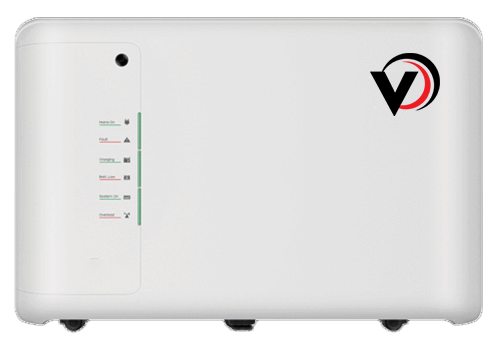
Inverter
An off-grid inverter is a crucial component of an off-grid solar power system, designed to convert direct current (DC) generated by solar panels into alternating current (AC) for use in household appliances. Unlike on-grid inverters, off-grid inverters operate independently from the main electricity grid, providing reliable power in remote areas or during power outages. They are equipped with advanced features to manage battery storage, ensure efficient energy conversion, and protect against electrical faults.
- High Efficiency: Achieves up to 95% efficiency in power conversion, ensuring minimal energy loss and maximum performance for your off-grid system.
- Wide Input Voltage Range: Designed to operate with a variety of battery voltages (12V, 24V, 48V), making it versatile for different setups.
- Pure Sine Wave Output: Provides pure sine wave AC output, ideal for sensitive electronics, ensuring stable and clean power for devices like computers, medical equipment, and household appliances.
- Overload Protection: Equipped with advanced overload protection features, safeguarding your system and connected devices from power surges and overcurrent situations.
- Built-in MPPT Charge Controller: Includes an integrated MPPT (Maximum Power Point Tracking) charge controller, optimizing energy production from solar panels and ensuring efficient battery charging.
- Compact Design: Compact and lightweight, allowing for easy installation in remote areas, small homes, cabins, RVs, or boats.
- User-Friendly Interface: Features a digital display for easy monitoring of system performance, battery status, and power consumption, with adjustable settings for customization.
| Specification Title | Specification Value |
|---|---|
| Rated Output Power | 3000W |
| Input Voltage Range | 12V – 24V DC |
| Surge Rating | 6000W |
| Nominal Battery Voltage | 24V |
| Peak Efficiency | 95% |
| AC Output Voltage | 120V / 230V |
| Dimensions and Weight | 350 x 220 x 150 mm, 5kg |
- Advanced Technology: The inverter may use cutting-edge technology for better efficiency, performance, and integration with renewable energy systems. For example, advanced MPPT (Maximum Power Point Tracking) technology ensures optimal solar panel performance.
- Dual Functionality: Some inverters serve as both inverters and chargers, eliminating the need for separate components.
- Robust Build Quality: Inverters designed for harsh weather conditions or extended use in remote areas, ensuring reliability even in extreme temperatures.
- Smart Grid Integration: Some off-grid inverters are capable of integrating with smart grids or hybrid systems, making them more versatile for future-proof energy solutions.
- Ease of Use: Many manufacturers emphasize easy setup, intuitive user interfaces, and straightforward installation for residential or commercial applications.